Clay Fill Dirt & Common Fill
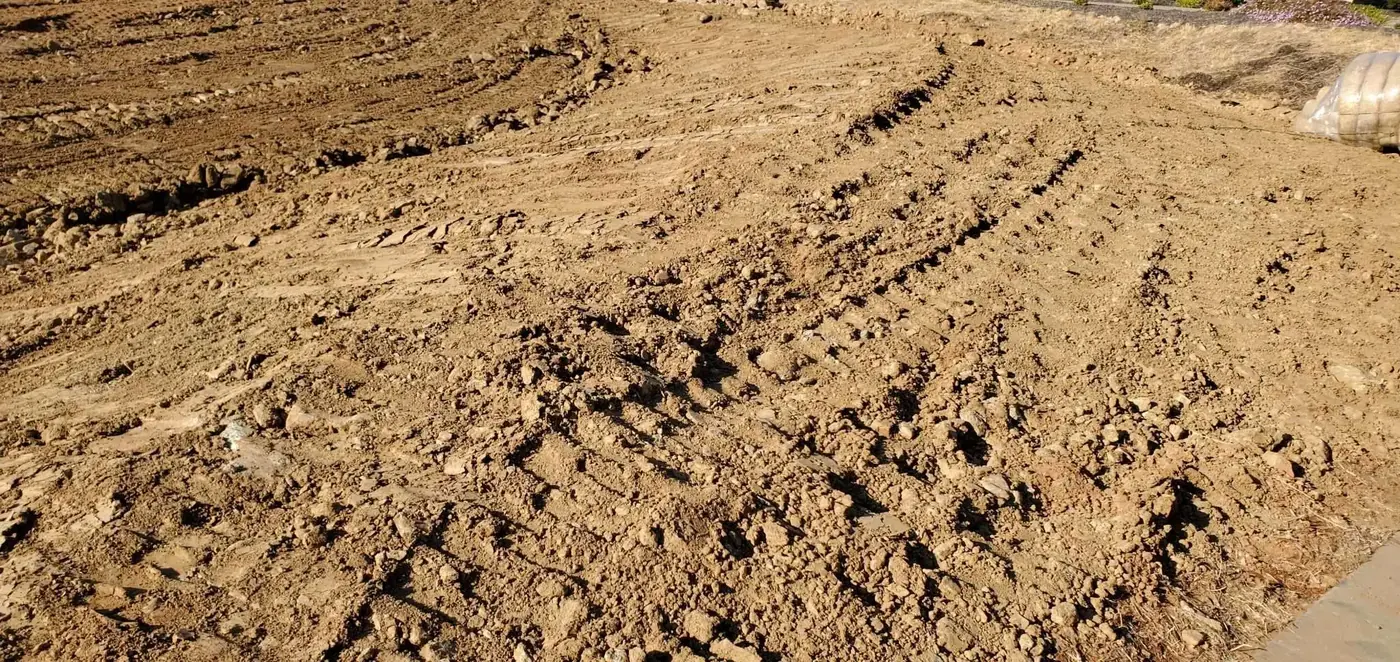
The bulk material. Over 80 percent of what we sell. Raising ground, filling holes, backfilling pools, shaping berms and tracks.
What it is and what it is forAmerican Dirt Delivery hauls clay fill dirt, select fill and topsoil into 15 metros across 8 states, with gravel in 5 of them. Everything is sold by the cubic yard, which is 27 cubic feet, with a 20 cubic yard minimum order. Delivery runs 8am to 5pm by dump truck or 18-wheeler, and most orders arrive in 1 to 3 days from stock.
We source dirt at the pit and haul it to your site ourselves, which cuts out the middlemen who sit between a borrow pit and your pad and add a margin at every step. That is what wholesale bulk pricing on dirt actually means. We carry mostly clay fill dirt, also sold as common fill, plus select fill and topsoil, and we run dump trucks and 18-wheelers on the delivery side.
Fill dirt is our best seller by a wide margin. Over 80 percent of what leaves our pits is common fill, because it covers the jobs that need the most volume: raising land, bringing low areas up to grade, filling holes, filling ponds and backfilling swimming pools that are being decommissioned. It is also what you spread around the foundation of a house so water runs away from the slab instead of sitting against it.
The trucking runs in both directions. We do dirt removal, haul-off and general dump truck work: excavation spoil, pool demolition spoil, surplus off a cut, anything that has to leave a site before the next trade can start. Tell us what the material is and whether it is clean, because contaminated spoil is priced as a different job.
How ordering works Work out my yardage
Your name, your number and the delivery address is all we need to start. We quote against a real address because haul distance sets the price.
We will call you back during business hours (Mon-Sat 8am-5pm) with a quote for that address.
Please call us on (713) 547-5624 and we will quote you on the phone.
Three materials cover almost every job that needs bulk dirt. They are not interchangeable, and picking the wrong one is the most expensive mistake on a dirt order, because bulk material is never returned. You end up paying the trucking twice. Here is the short version of what each one does.
The bulk material. Over 80 percent of what we sell. Raising ground, filling holes, backfilling pools, shaping berms and tracks.
What it is and what it is for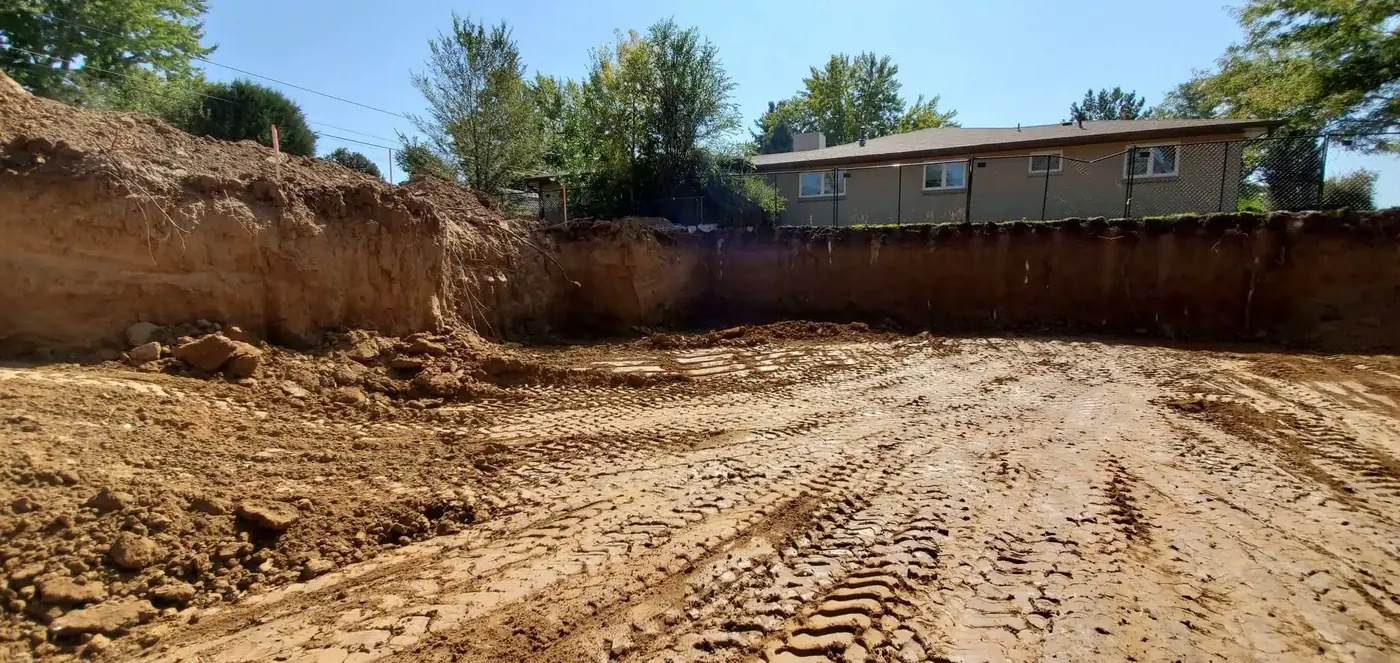
The spec-driven fill. Building pads, driveway subgrade, flatwork base and backfill against retaining walls. It compacts and it stays compacted.
What it is and what it is for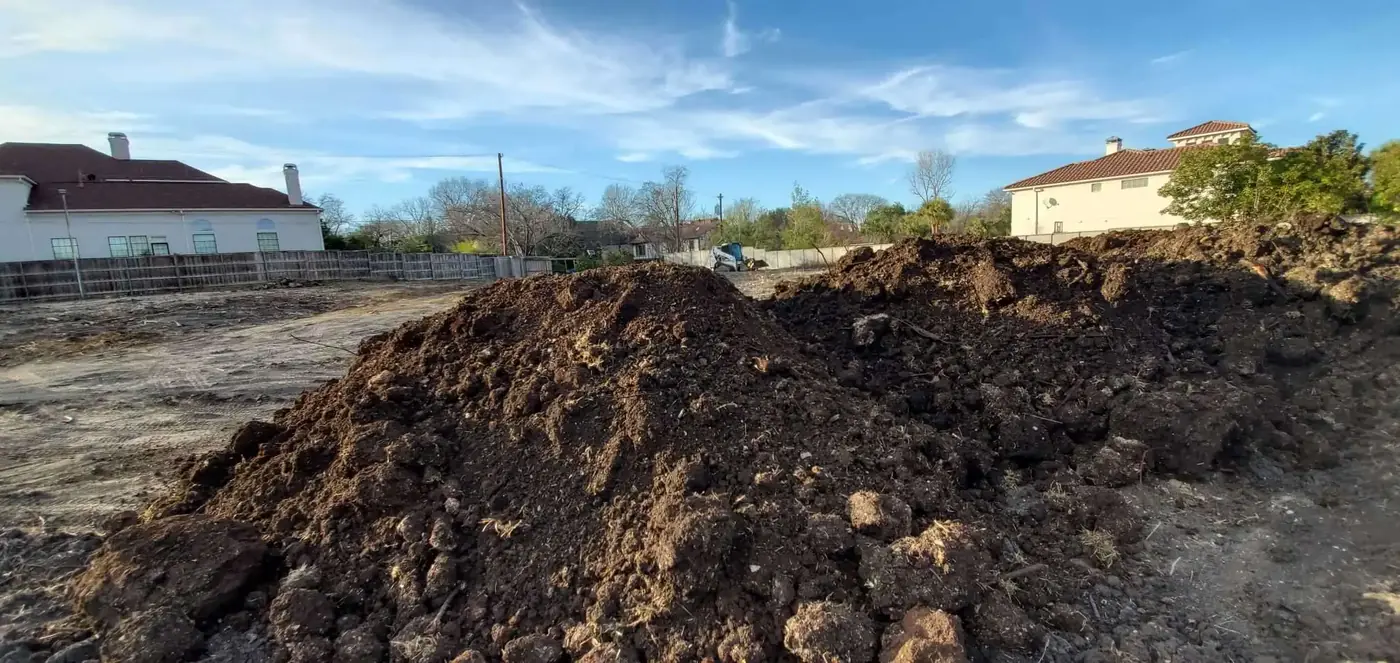
The growing layer. 4 to 6 inches over a prepared grade for lawn, 8 to 12 inches for beds. The dearest of the three, because there is least of it.
What it is and what it is forEverything is priced by the cubic yard, so the first question on every order is how many yards you need. A cubic yard is 27 cubic feet: a block 3 feet by 3 feet by 3 feet. Multiply the length in feet by the width in feet by the depth in feet, then divide by 27.
Depth is almost always given in inches, so divide the inches by 12 first. 4 inches is 0.333 feet. 6 inches is 0.5 feet. A 20 foot by 30 foot area at 4 inches deep works out at 20 by 30 by 0.333, which is 200 cubic feet, or about 7.4 cubic yards. That is under our minimum, which is worth knowing before you call.
Then add an allowance. Loose material off a truck takes up more room than the same material once it has been spread, watered and walked on. For topsoil going down to a finish level, 10 percent is a fair margin. For fill being placed and settled, 10 to 20 percent. For select fill being compacted in lifts to a spec, budget 20 to 25 percent, because that is the compaction doing its job.
Running short is worse than running over. A second trip to top up a job carries a full trucking charge on a small quantity, which is the most expensive dirt you will ever buy. For weight, one cubic yard of aggregate, sand or dirt runs about 1.5 tons as a general guide, so 20 cubic yards is roughly 30 tons on the road.
How far 1 cubic yard spreads, at common depths. Figures are square feet of coverage per cubic yard, rounded. These apply to any bulk material sold by the cubic yard.
| Depth | One cubic yard covers |
|---|---|
| 1 inch | 324 square feet |
| 2 inches | 162 square feet |
| 3 inches | 108 square feet |
| 4 inches | 81 square feet |
| 6 inches | 54 square feet |
| 12 inches | 27 square feet |
Most orders leave from material we already hold in stock at the pit, so the standard delivery window is 1 to 3 days. On very large orders, roughly 500 loads and up, we can source to the cheapest available supply instead. That takes longer, but on that kind of volume it drops the price per cubic yard. Every window excludes holidays, weather days and dry time days.

1 to 3 days
[PRICE-TBC]price per cubic yard

500+ load orders
[PRICE-TBC]price per cubic yard
Tier pricing sits on the live WooCommerce shop with no unit printed anywhere on the product page, and the site's own banner says online ordering is switched off. We will not publish a number we cannot state the unit for. Confirm the unit and whether delivery is included and this becomes a one line change.
Dirt is one of the few products where two suppliers can quote the same 40 cubic yards and come back 50 percent apart, both honestly. Roughly 90 percent of what you pay for a load is trucking, not dirt, and trucking is sensitive to things that have nothing to do with the material. These are the 6 variables that actually move the number.
The single biggest variable. A load going 12 miles and a load going 45 miles are not the same price, even for the same material on the same day. This is why we quote against a real delivery address rather than publishing a flat rate per yard. A quote given without an address is a guess.
A bigger truck moves more yards per trip, so it is cheaper per yard. If a gate, a power line, soft ground or a turnaround rules out the 18-wheeler, the same 40 yards arrives in 4 smaller loads instead of 2 big ones, and the price follows the truck count rather than the yardage.
Most orders ship in 1 to 3 days from material we hold in stock at the pit. On a very large order, around 500 loads and up, we can source to the cheapest available supply instead, which takes longer but lowers the price per cubic yard on that volume. Most jobs never touch that route.
Clay fill is the cheapest of the three because it is abundant and needs almost no processing. Select fill costs more because you are paying for a gradation that compacts predictably. Topsoil is usually the dearest per yard because there is genuinely less of it in the ground.
Below 20 cubic yards the trucking cost swamps the material cost and nobody comes out ahead, which is why the minimum exists. Above it, the cost per yard falls as the order grows, because the fixed cost of getting a truck to your address is spread over more material.
Saturated ground cannot be driven on or compacted, and a truck stuck on a soft lot is a bad day for everyone. Our delivery windows allow for weather days and dry time days for that reason. In Denver the freeze closes the season. In Sacramento the wet half of the year runs November through March.
No account to open, no minimum contract, no quoting portal. Measure the area, pick the material, get a number against your delivery address, put 20 percent down and the loads start, most within 1 to 3 days from stock. Most orders go from first call to a price inside one conversation.
Everything is sold by the cubic yard. Measure the area and the depth, then run it through the calculator on this site. If you are filling a pool or a pond the volume is bigger than it looks, so use an average depth across the footprint. The minimum order is 20 cubic yards.
Clay fill for bulk and for anything you want to hold its shape. Select fill for anything that will carry load. Topsoil for the top 4 to 6 inches where something has to grow. If you are not sure, describe the job rather than guessing. Changing your mind after the truck has tipped means paying the trucking twice.
Most orders ship in 1 to 3 days, delivered from material we hold in stock at the pit. On very large orders of about 500 loads or more, we can go and source the cheapest supply for the job instead, which takes longer but lowers the price per cubic yard on that volume. For a normal order there is nothing to choose here, it ships from stock.
We quote against the delivery address, because haul distance drives the number. If you have a competing quote you think is better, send it to us to review before you place the order. Price matching has to happen before the order goes in. We cannot change pricing after an order or a payment.
An initial payment of 20 percent starts the order. The balance falls due immediately after delivery, from the date of the estimate or invoice we issue. Late balances carry 1.5 percent per month compounded.
Loads arrive between 8am and 5pm until the ordered amount is met, across several loads and sometimes several days on a large order. Pay American Dirt Delivery directly. Never the driver, never a carrier.
Jerry started this company after watching a dirt supplier take customers' money and deliver half of what was promised. He left that business with thousands of dollars missing from his own account because of hot cheques. Everything about how American Dirt Delivery runs is a reaction to that.
Our dirt is always clean. No concrete, no rebar, no asphalt, no construction trash. It is the first question every contractor asks and the one thing we will not compromise on, because a contaminated load is a load you pay a second person to haul away again.
We buy at the source and cut out the middlemen. That is what keeps the cost of fill dirt workable on a 20 yard back yard job and on a subdivision pad, and it is the reason we can quote wholesale bulk pricing on volume rather than marking up somebody else's load.
We will not be beaten on topsoil, select fill or fill dirt. If you think you have found a better deal, send it to us to review before you place the order. A price match has to happen before the order goes in. We cannot change pricing after an order or a payment.
Real reviews, a number that stays the same, and straight answers about dates. In a trade where the customer usually cannot verify what they bought until the truck has already left, those 3 things are the whole offer.
The trucks run in both directions, and the half of the business that takes dirt away gets far less attention than the half that brings it. It is a separate service with a separate price structure, and it is priced on truck time plus disposal rather than on material.
Excavation spoil, pool demolition spoil, surplus from a cut, material that has to leave a site before the next trade can start. Tell us what it is and whether it is clean, because contaminated spoil goes somewhere different at a different rate.
We run dump trucks and 18-wheelers, and not every job is a delivery. If you need truck time rather than material, that is a conversation worth having, particularly on jobs where material is coming off one part of a site and going onto another.
If you have clean surplus and a neighbour needs fill, say so. Moving 40 cubic yards half a mile costs a fraction of taking it to a disposal site 30 miles away and charging you for both ends. Roughly 90 percent of the cost is the truck, so distance is the whole game.
The cheapest time to solve a spoil problem is before the excavator starts, not when there are 200 cubic yards in the way of the concrete crew. If your job is going to generate material, work out roughly how much and call us then.
Each of these pages is about the ground under that metro: what it is made of, what gets built on it, what the local material names mean, and what that implies for what you should be ordering. No two are the same page, because no two are the same construction problem. We group them by how we supply them.
Our home markets on the Texas pits. Standard orders leave from material we hold in stock, usually inside 1 to 3 days.
Established delivery metros where we run regularly. Gravel is available in San Antonio, Austin, Nashville and Las Vegas alongside the soil materials.
Metros at the far end of the line from Texas. Standard orders still run 1 to 3 days, and large orders are sourced to the cheapest supply.
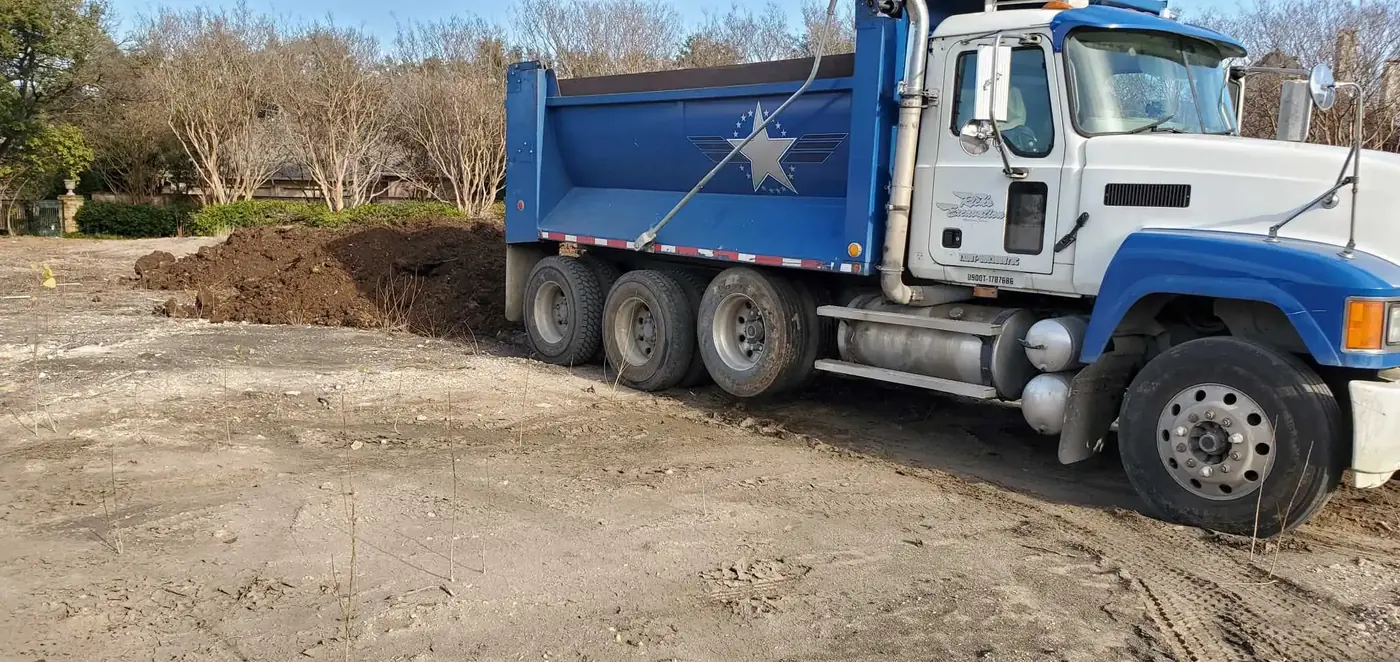
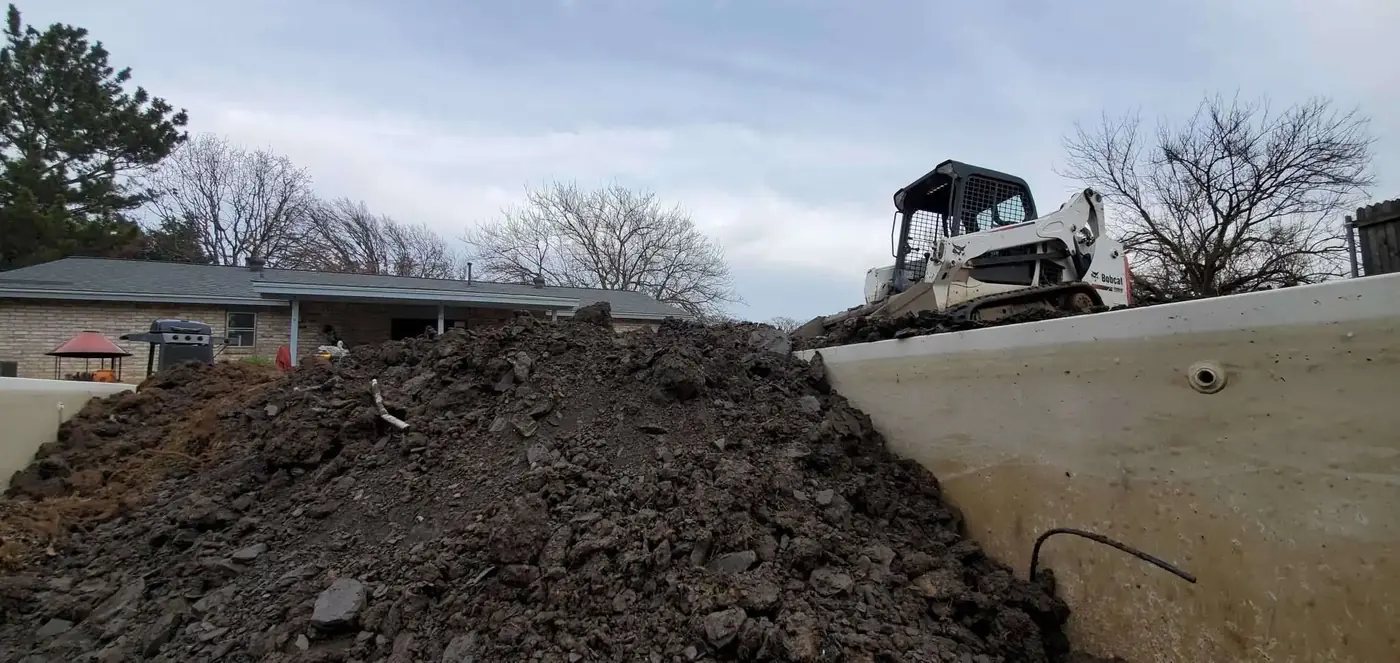
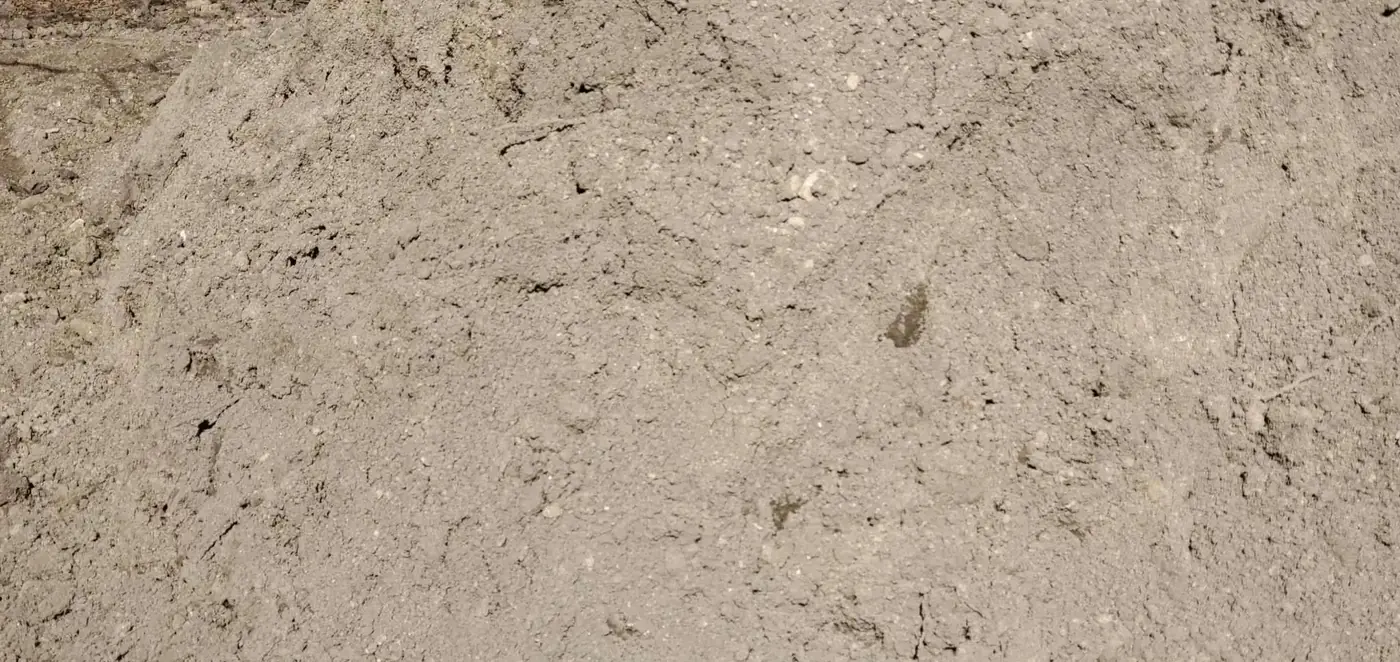
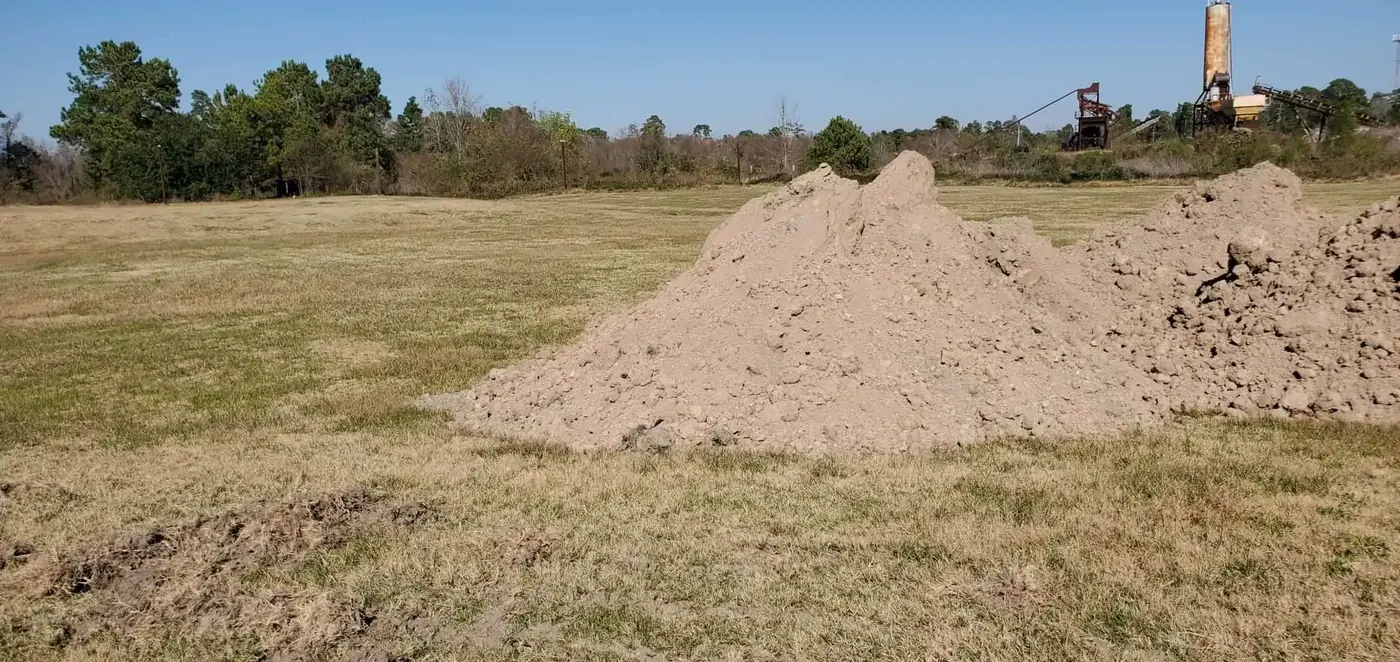
Loads on the ground across our metros. Clay fill being spread and shaped, topsoil going down over prepared subgrade, and pads being built up in lifts.
20 cubic yards. Below that the trucking cost dominates the price to the point where it stops making sense for either of us, because roughly 90 percent of what a load costs is the truck rather than the dirt. Bulk wholesale pricing is available on larger volumes.
By the cubic yard. The number depends on the material, the delivery address and how fast you need it. Haul distance is the biggest single variable, which is why we quote against a real address rather than publishing a flat rate that would be wrong for most of the people reading it.
Most orders arrive in 1 to 3 days, because we deliver from material we already hold in stock at the pit. On very large orders, around 500 loads and up, we can source to the cheapest supply instead, which takes longer but lowers the price per cubic yard. Those windows exclude holidays, weather days and dry time days, because saturated ground cannot be driven on or compacted.
Fill dirt is the mineral subsoil below the organic layer, bought for volume. Topsoil is the thin organic surface layer, bought for growing. Fill dirt is cheaper, heavier and more stable. Topsoil is dearer, lighter and it settles. Most grading jobs want both: fill for the lift and 4 to 6 inches of topsoil on top.
Multiply length in feet by width in feet by depth in feet, then divide by 27. For depth in inches, divide by 12 first. A 1,000 square foot area at 6 inches deep is about 18.5 cubic yards. Add 10 to 25 percent for settlement and compaction depending on how the material is being placed.
About 1.5 tons, or roughly 3,000 pounds, as a general guide for dirt, sand or aggregate. Dry screened topsoil sits at the lighter end and saturated clay well above it, so treat 1.5 tons as a planning figure rather than a scale reading.
No. A driver tips the load where you direct them. Spreading and compaction are your crew's job. For clay fill in particular you want a skid steer, a tractor with a loader or a small dozer on site, because a machine will move in 20 minutes what a crew with shovels would take most of a day to shift.
No. Make payments to American Dirt Delivery only. We contract to third-party carriers on some runs, and paying a driver directly is the most common way customers in this industry lose money. This rule is in our published policy and we repeat it on every page for a reason.
Often, yes. Coverage is about haul distance from the pit holding your material, not about city limits. A town 20 minutes past a city we list is usually fine. A town 2 hours past it usually is not. Give us the address and we will tell you straight.
Not at the moment. The shop is not taking online orders, so orders are placed by phone or through the form on this site. Tell us the delivery address, the cubic yards and the material, and we will come back with a price.
Give us the delivery address, the yardage and what you are building. If you are not sure about the yardage, tell us the dimensions and we will work it out with you.