Clay Fill Dirt & Common Fill
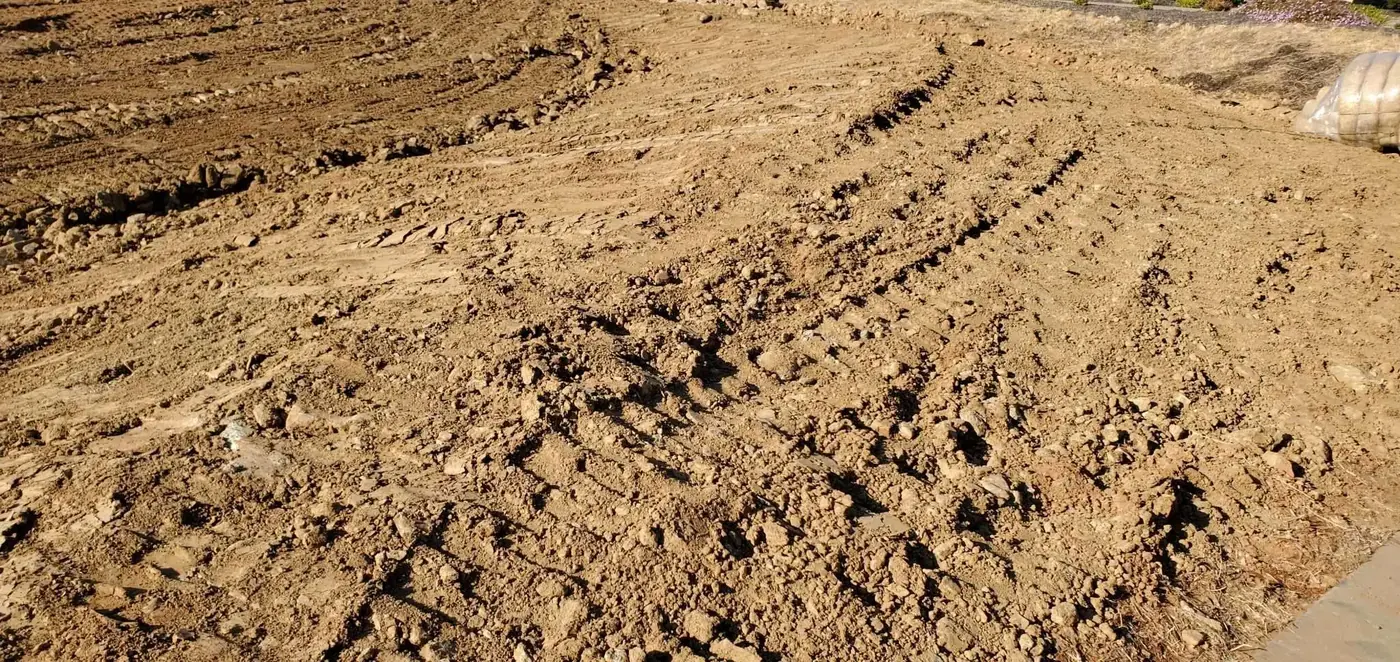
The bulk material. Over 80 percent of what we sell. Raising ground, filling holes, backfilling pools, shaping berms and tracks.
Read the full page3 materials cover almost every job that needs bulk dirt, and they are not interchangeable. Clay fill adds volume. Select fill carries load. Topsoil grows things. All 3 are sold by the cubic yard with a 20 cubic yard minimum, and none of them can be returned once the truck has tipped.
Short version. Use clay fill dirt to add volume: raising low ground, filling holes, backfilling a pool. Use select fill under anything that carries weight: a slab, a driveway, a patio, placed in 6 to 8 inch lifts and compacted. Use topsoil for the top 4 to 6 inches, where something has to grow. All 3 are sold by the cubic yard with a 20 cubic yard minimum.
The 3 materials side by side. Every figure in the weight row is a rule of thumb that moves with moisture content: the same cubic yard of clay weighs noticeably more after a wet week than it does in a dry August.
| Clay fill dirt | Select fill | Topsoil | |
|---|---|---|---|
| What it is | Subsoil below the topsoil layer, mostly clay | A graded sand and fines blend chosen to compact | The thin organic top layer of the ground |
| Main job | Adding bulk volume | Carrying structural load | Growing grass and plants |
| Compacts predictably | No. Density depends on moisture on the day | Yes. That is what you are paying for | No. It consolidates and loses volume |
| Will plants grow in it | Barely. Almost no organic matter | No. It is a construction material | Yes. That is the entire point |
| Typical placement depth | In lifts to whatever height you need | 6 to 8 inch lifts, compacted each lift | 4 to 6 inches lawn, 8 to 12 inches beds |
| Volume allowance to order | 10 to 20 percent over the calculation | 20 to 25 percent for a compacted pad | About 10 percent for consolidation |
| Relative cost per cubic yard | Cheapest of the 3 | Middle. You pay for the gradation | Dearest. It is the scarcest |
| Rough weight per cubic yard | Heaviest. Wet clay more again | Similar to fill, slightly more granular | Lightest of the 3 |
| Share of what we sell | Over 80 percent | Most of our Texas pad work | The finishing layer on most grading jobs |
Almost every material mistake we see comes from answering the wrong question. People start from what a material is called and work forwards. Start from what the ground has to do instead, and there are only 4 questions.
If a slab, a driveway, a sidewalk, a patio or a retaining wall is going to sit on it, the answer is select fill, placed in 6 to 8 inch lifts and compacted. Clay fill under a structure is how you buy a foundation problem 5 years from now, because clay changes volume with its moisture content and concrete does not.
Raising a low yard, filling a hole, backfilling a decommissioned pool, building a berm or shaping a track. That is clay fill dirt, the cheapest material on this page and over 80 percent of what we sell. Pay for select fill here and you have spent extra on a property you are not using.
Then topsoil, and only in the top layer. Topsoil is a finishing material, not a bulk one. Build the grade with fill and cap it with 4 to 6 inches of topsoil rather than trying to buy the whole 12 inch lift in the dearest material on the list.
If an engineer or a geotechnical report is attached to the job it will name a plasticity index ceiling, a gradation and a required compaction percentage against a Proctor test such as ASTM D698. Send us that before you order rather than after the inspection. If we cannot source to it, we will say so.
You pay the trucking twice. That is the whole answer, and it is why this page exists. Roughly 90 percent of what a load of dirt costs is the truck rather than the dirt, so a wrong material is not a small correction. We do not accept returns on bulk material and we do not refund trucking after a delivery has been made, because the truck cost was spent the moment the wheels turned.
The 2 expensive mistakes run in opposite directions. Filling a 3 foot hole with topsoil means buying the dearest material on the list for a job the cheapest one does better, and then watching the ground sink for years as the organic content breaks down. Capping a new lawn with clay fill means buying material nothing will grow in, and then buying the topsoil you should have ordered in the first place.
The third mistake is subtler and more expensive. Using clay fill under a slab, a driveway or a patio because it was cheaper per yard works fine until the first full wet and dry cycle. Then the clay swells, the concrete follows it up, the clay shrinks and the concrete cracks. That correction is not a second dirt delivery, it is a concrete job.
Yes, and on a lot of jobs you should. The common combination is clay fill for the bulk of the lift and topsoil for the top 4 to 6 inches. Raising a 1,000 square foot area by 1 foot is about 37 cubic yards total, which splits roughly 25 yards of fill and 12 yards of topsoil.
Tell us the split when you order so we can work out the loads, because different materials generally come on different trucks and the sequencing matters. Fill goes down and gets shaped first. Topsoil arrives once the grade underneath it is right, not before, or you will be moving the topsoil twice.
The 20 cubic yard minimum applies to the order rather than to each material, so a 25 yard fill and 12 yard topsoil order is a single 37 yard order and it clears the minimum comfortably.
Each material has its own page with the working properties, the placement depths, how it behaves across our markets and a worked yardage example.
The bulk material. Over 80 percent of what we sell. Raising ground, filling holes, backfilling pools, shaping berms and tracks.
Read the full page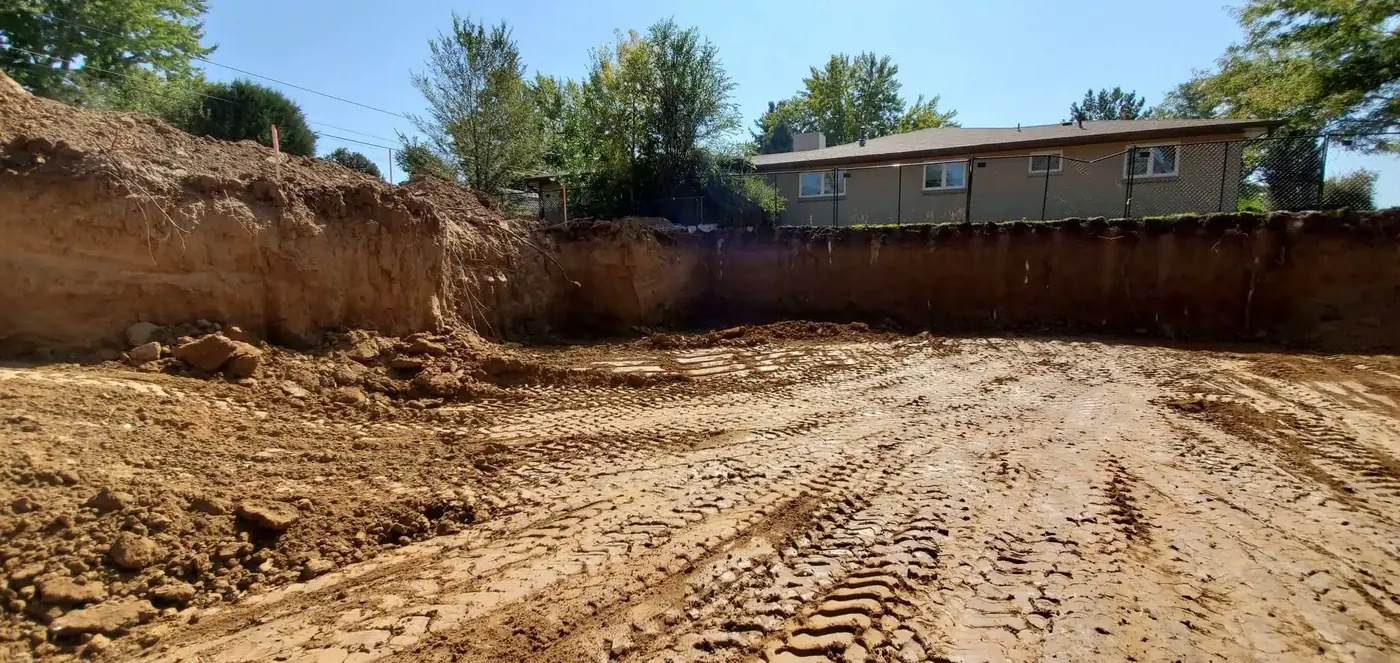
The spec-driven fill. Building pads, driveway subgrade, flatwork base and backfill against retaining walls. It compacts and it stays compacted.
Read the full page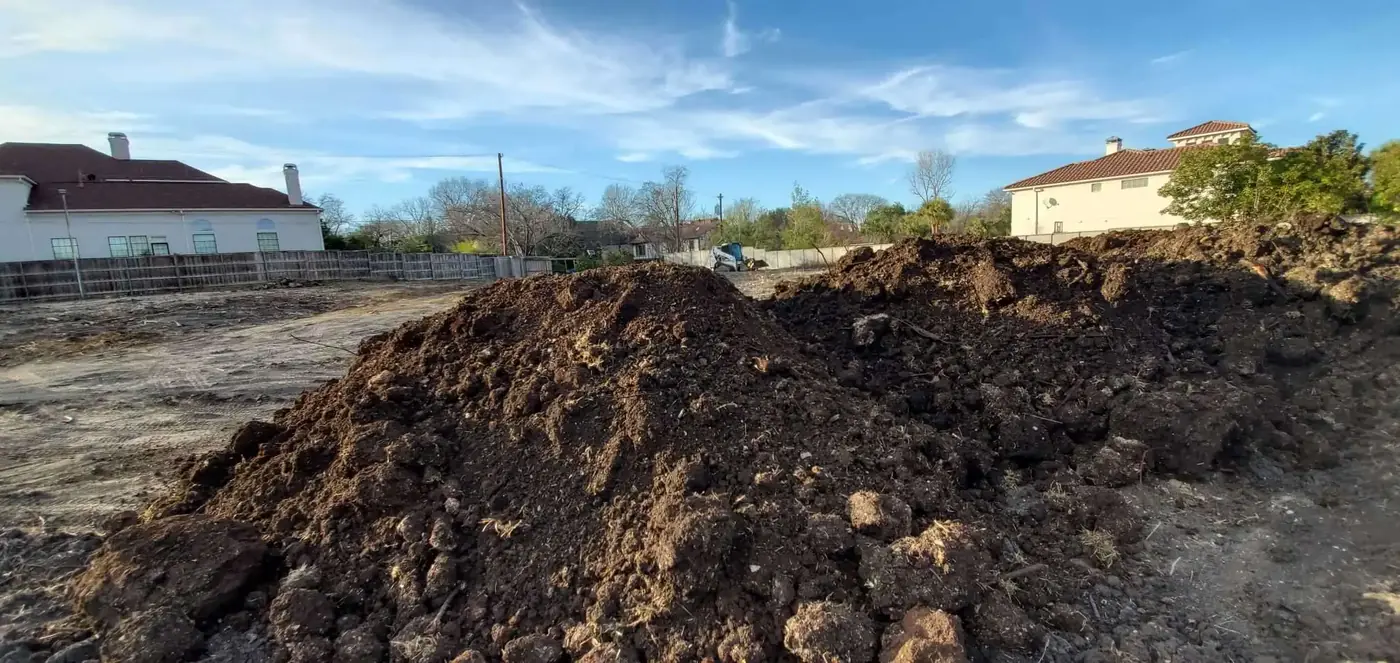
The growing layer. 4 to 6 inches over a prepared grade for lawn, 8 to 12 inches for beds. The dearest of the three, because there is least of it.
Read the full pageClay fill dirt, every time. It is the most abundant of the 3 and it needs the least processing. Topsoil is the dearest because there is genuinely less of it in the ground. It is a thin surface layer, and every cubic yard sold came off the top of somewhere else. Select fill sits between them, and the premium buys a gradation that compacts predictably.
You can put it in a hole and you should not. Topsoil has organic matter in it, organic matter breaks down, and material that breaks down loses volume. A hole filled with topsoil sinks and keeps sinking. It also costs considerably more per cubic yard than the fill dirt that belongs there.
Yes. The common split is clay fill for the lift and 4 to 6 inches of topsoil on top. Tell us the split when you order so we can work out the loads and the sequence, because the topsoil should arrive after the grade underneath it is right. The 20 cubic yard minimum applies to the order rather than to each material.
Describe the job and the site rather than guessing. What you are building, what is going on top of it, how deep, and whether anything has to grow. That is a 2 minute conversation and it is a great deal cheaper than a wrong load, because bulk material is not returnable and the trucking is 90 percent of the cost.
Our 3 published materials are clay fill dirt, select fill and topsoil. Other bulk products get asked for constantly, and what we can source varies by market and by haul distance. Name the product on your plans when you call and we will tell you straight whether we can get it to your address economically.
Describe the job and the site and we will tell you which of the three suits it. That conversation costs nothing. A wrong load costs the trucking twice.