Clay Fill Dirt & Common Fill
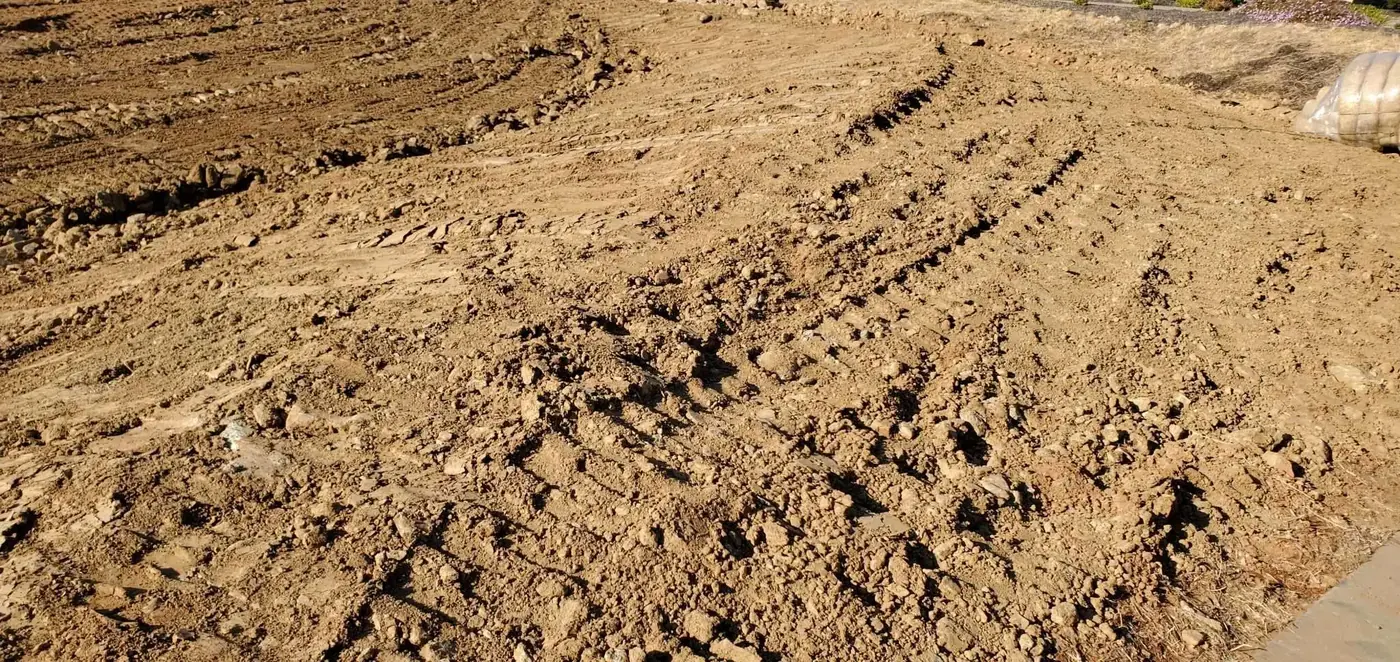
The bulk material. Over 80 percent of what we sell. Raising ground, filling holes, backfilling pools, shaping berms and tracks.
Read moreTopsoil is the thin organic surface layer of the ground, bought as the growing medium rather than as bulk. Lay 4 to 6 inches for a new lawn and 8 to 12 inches for beds. One cubic yard covers about 81 square feet at 4 inches deep. It is the dearest of our 3 materials, because there is least of it.
Topsoil is the top layer and it is thin. On a lot of ground it is a few inches deep, and on ground that has been farmed or scraped it can be close to gone. Every cubic yard sold came off the top of somewhere else. That scarcity, not any processing cost, is why it is the dearest of the 3 materials we carry.
It is also why topsoil quality varies more between sources than fill does. Fill is fill. Topsoil can be dark and rich or light and sandy depending on the ground it came off, which is worth knowing before you order enough of it to cover a yard. Tell us what you are growing and we will tell you what we can source for your area.
Topsoil runs finer than fill by nature, and it is a powdery, sandy material rather than a chunky one. It is the one material on this site you can genuinely move with a wheelbarrow and a rake, which is part of why homeowners buy it in small quantities and end up paying bagged prices for it.
For a new lawn going down over prepared subgrade, 4 to 6 inches of topsoil is the usual target. Less than about 4 inches and the grass roots hit dead ground in the first dry spell, which is the most common reason a new lawn browns off in its first summer while the neighbour's holds.
For raised beds and vegetable gardens, 8 to 12 inches gives roots somewhere to go. For top-dressing an established lawn to smooth out low spots, a quarter to half an inch per pass, repeated across seasons. Bury a living lawn in several inches of soil in one go and you smother it.
Work out the volume before you call. One cubic yard covers roughly 108 square feet at 3 inches deep, 81 square feet at 4 inches and 54 square feet at 6 inches. A 1,000 square foot lawn at 4 inches deep is about 12.5 cubic yards, which is under our 20 cubic yard minimum, so it is worth checking the whole area you want to cover before you order.
Topsoil does not compact, it consolidates. A pile of loose topsoil that gets spread, watered and walked on will end up noticeably lower than the level you raked it to. If you have a finish level you care about, meeting a patio edge or matching a driveway lip, order enough to place it slightly proud and let it settle in. A 10 percent margin is a fair starting point.
The corollary is that topsoil is never structural. Do not build a pad out of it, do not use it as backfill behind a wall, and do not put it under anything that has to stay level. It has organic content in it, organic content breaks down, and material that breaks down loses volume. A hole filled with topsoil sinks, and it keeps sinking for years.
No. Screened topsoil is soil. A garden mix or planting blend is soil with compost and sometimes sand blended into it at a ratio, and it costs considerably more per cubic yard. If a landscape plan calls for a blended planting medium, that is a different product and you should order it as one by name.
For most jobs, raising a bed, filling a low corner of the yard, prepping for sod, straight topsoil with your own compost worked into the top few inches does the job for a fraction of the cost. Buy the bulk material from us and buy the amendment locally in the quantity you actually need.
This is the one material you can genuinely move by hand. It is light compared to clay fill and it does not clump. For a bed or a small yard, a weekend and a couple of people is enough. A cubic yard is about 9 to 14 wheelbarrow loads, allowing for the fact that nobody fills a barrow to its rated capacity with wet soil.
For anything over roughly 20 or 30 cubic yards, get a machine. At 1.5 tons a yard, a 30 yard load is 45 tons, and the shovelling stops being fun a long way before the pile runs out. Rake to a consistent depth rather than chasing a level with your eye, and water it in before you seed or lay sod so the settlement happens before the grass does.
Working properties for bulk topsoil. Quality and weight vary more between sources for topsoil than for any other material we carry, so tell us what you are growing before you order.
| Property | What to expect |
|---|---|
| Sold by | The cubic yard, 27 cubic feet |
| Minimum order | 20 cubic yards |
| Rough weight | Lightest of our 3 materials, under 1.5 tons per yard dry |
| Lawn depth | 4 to 6 inches over prepared subgrade |
| Bed depth | 8 to 12 inches |
| Top-dressing depth | A quarter to half an inch per pass |
| Coverage | 81 square feet per cubic yard at 4 inches deep |
| Settlement allowance | Order about 10 percent over the calculated volume |
| Structural use | None. It consolidates and loses volume |
| Relative cost | The dearest of our 3 materials |
Topsoil demand is the most regionally variable of the 3 materials, because it depends on how much usable soil the local ground already has. In the drier markets it is the most common order we take, because there is barely any usable soil in the ground to begin with.
The most common order in this market by a distance. The Front Range is high, dry country with a thin native soil layer low in organic matter, and new builds get handed over with subsoil at the surface. 4 to 6 inches of imported topsoil over the yard is what turns it into a lawn. More on the ground under Denver.
Landscape conversions drive it. Water rules and a 5 month dry season have pushed a lot of front yards from turf to planted beds, and every conversion is a grading job. In the eastern suburbs, beds get built up over the hardpan rather than dug into it, which takes imported topsoil in volume. More on the ground under Sacramento.
Usually the finishing layer on a bigger fill job rather than the job itself. A low back yard gets raised with clay fill and capped with topsoil so grass will grow on it. Ordering the whole lift in topsoil is the single most expensive mistake we see on this material. More on the ground under Houston.
Same pattern as Houston, plus new construction handover. Subdivisions across the northern growth corridor get finished with imported topsoil over graded select fill, because nothing will grow in the pad you just built. More on the ground under Dallas-Fort Worth.
Multiply the area in square feet by the depth in feet, then divide by 27. For a 1,500 square foot lawn at 4 inches, that is 1,500 by 0.333 divided by 27, which is about 18.5 cubic yards. At 6 inches the same lawn takes about 27.8 cubic yards.
Add roughly 10 percent for consolidation, because spread, watered and walked-on topsoil ends lower than the level you raked it to. That 18.5 yard lawn wants about 20 cubic yards delivered, which lands exactly on our minimum order.
Multiply the area in square feet by the depth in feet, then divide by 27. For 1,000 square feet at 4 inches deep that is about 12.5 cubic yards, and at 6 inches about 18.5 cubic yards. Add around 10 percent for consolidation. Our calculator does the arithmetic for your dimensions.
324 square feet at 1 inch deep, 162 at 2 inches, 108 at 3 inches, 81 at 4 inches, 54 at 6 inches and 27 square feet at a full foot deep. Those are the figures to plan against, and they apply to any bulk material sold by the cubic yard, not just topsoil.
Topsoil runs finer than fill by nature. Tell us what you are doing with it and we will tell you what we can source for your area rather than promising a screening specification we have not confirmed for that market. Quality varies more by source on topsoil than on any other material we carry.
Only in thin layers. Top-dressing at a quarter to half an inch per pass is fine and is how low spots get smoothed out over a couple of seasons. Burying living turf under several inches of soil kills it and leaves a layer of decomposing grass under your new grade. To raise a lawn significantly, strip or kill the grass first.
Less than fill or sand. Our general rule of thumb across dirt, sand and aggregate is about 1.5 tons per cubic yard, and dry screened topsoil sits below that. Wet topsoil closes the gap quickly, because the water filling the voids is itself heavy.
Topsoil is the cap, not the lift. For the bulk underneath it, and for anything structural, these are the other 2 materials.
The bulk material. Over 80 percent of what we sell. Raising ground, filling holes, backfilling pools, shaping berms and tracks.
Read more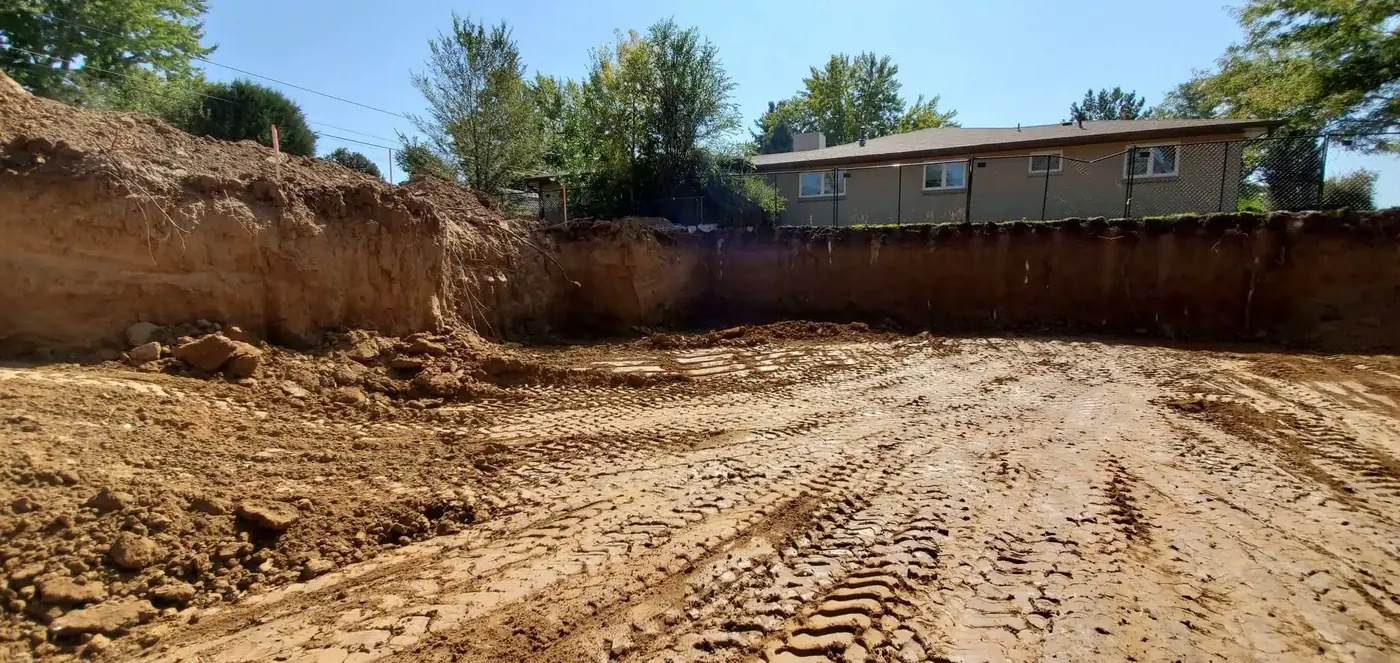
The spec-driven fill. Building pads, driveway subgrade, flatwork base and backfill against retaining walls. It compacts and it stays compacted.
Read moreDescribe the job and the site and we will tell you which of the three actually suits it. That conversation costs nothing. A wrong load costs the trucking twice.